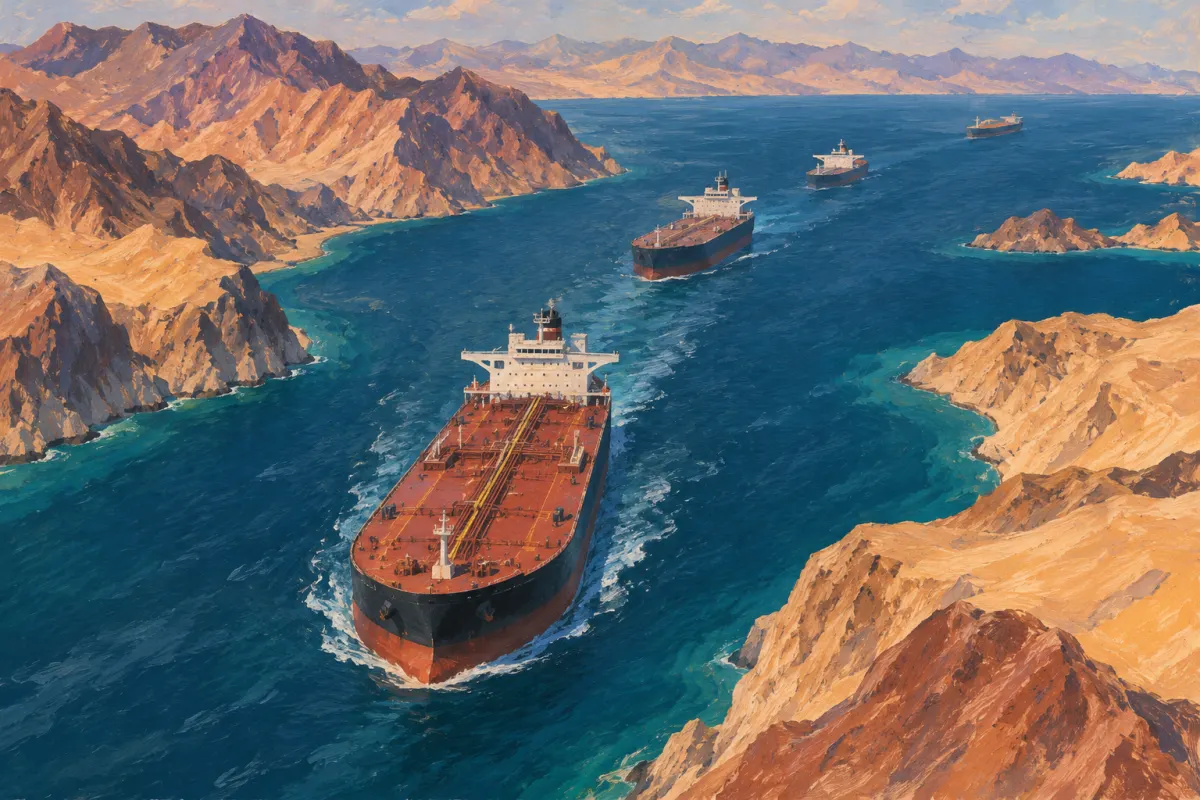
UK Maritime Trade Operations (UKMTO) said on Sunday, November 15, that Indian shipping authorities had reported an attack on a tanker sailing east through the Arabian Gulf toward the Strait of Hormuz. UKMTO said everyone aboard was safe. TankerBrief covered the warning in its 16:45 UTC update.
The warning comes as more oil is leaving the Gulf. The International Energy Agency (IEA) estimated that October exports from the Gulf, excluding Oman, reached 18.4 million barrels a day, still 26% below prewar levels. Sunday’s report puts the risks to that recovery back in focus.
What the maritime warning says
Warning 205-26 places the attack before the tanker entered the strait. It gives the date but leaves the exact time pending and does not identify the vessel. UKMTO advised ships in the area to proceed cautiously and report suspicious activity. The notice gives no estimate of cargo lost or deliveries delayed.
Why the Strait of Hormuz matters to oil markets
The strait is the narrow route between Iran and Oman that links the Gulf to the open sea. Some crude can bypass it through pipelines in Saudi Arabia and the United Arab Emirates. Those routes have limited capacity, so companies cannot simply send every shipment by another route when passage becomes riskier.
Higher shipping costs can reach refiners even if the amount of crude available worldwide is rising. A cargo that arrives late can leave a refinery looking for a replacement. The company may pay more for a nearby shipment or draw down its own stocks until the delayed cargo arrives.
How an oil surplus can coexist with tight fuel supplies
A global surplus means the world is producing more oil than it uses over the period measured. In its November 13 outlook, the IEA projected a fourth-quarter surplus while describing diesel supplies as particularly tight. Crude still has to reach a refinery and be processed before it becomes diesel. For investors following producers, refiners or fuel buyers, shipment volumes and the cost of delivering those barrels help explain how the same disruption can affect each business differently.
Go to the source
- UK Maritime Trade Operations · November 15 warning 205-26
- Anadolu · Reporting on the November 15 tanker warning
- TankerBrief · November 15 shipping update at 16:45 UTC
- International Energy Agency · November 2026 Oil Market Report
- U.S. Energy Information Administration · Hormuz and alternative oil routes
For general education. Consider your circumstances and local rules before making investment decisions. Figures describe the dates stated in this article and are not live market quotes.
Build your investing knowledge