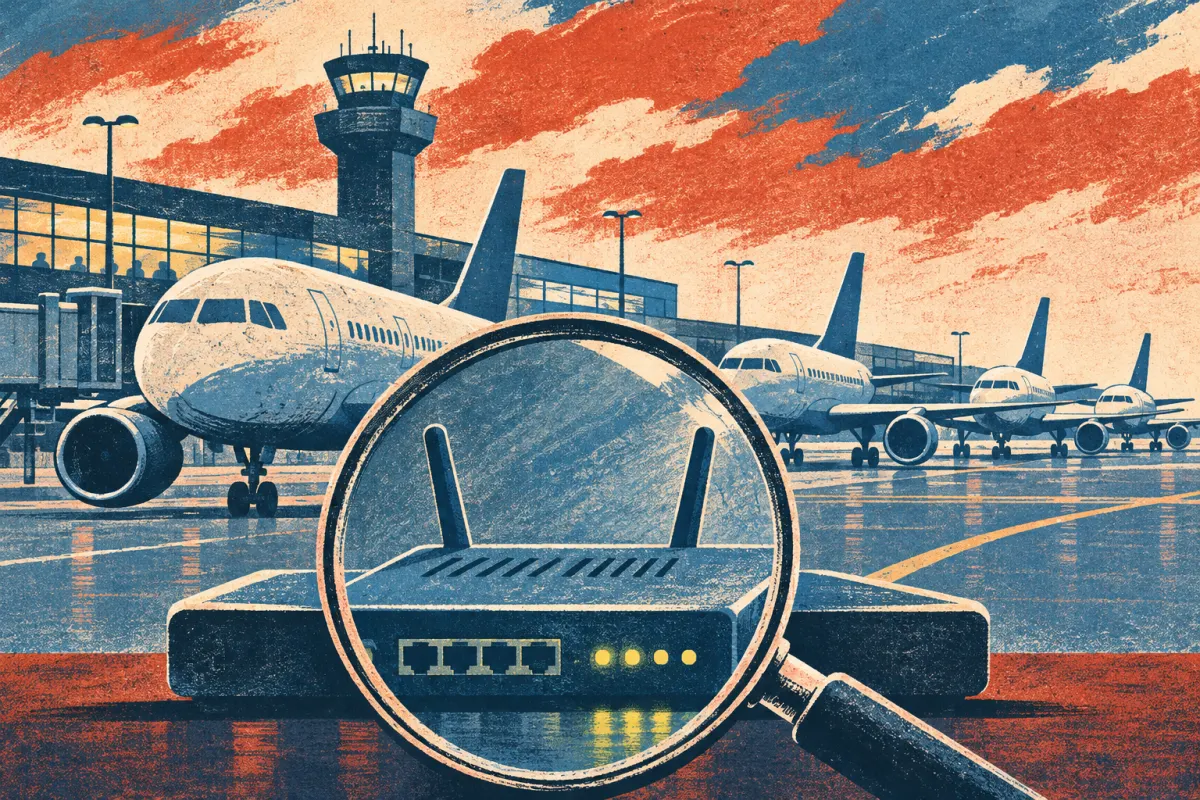
U.S. airlines were still working through the effects of Friday’s nationwide ground stop in a November 15 update from Investing.com. Its report said normal airline operations were expected largely by late Sunday. That was an expectation, not confirmation that every flight or airport had recovered.
What has been confirmed about the outage?
The FAA’s November 13 statement said communications problems affecting multiple air traffic control centers prompted the nationwide ground stop. The agency labeled that initial information preliminary. A ground stop restricts departures; it should not be read as a statement that aircraft already flying could not land.
In its November 14 update, the Transportation Department said the airspace had reopened, with delays and cancellations still possible. Transportation Secretary Sean Duffy attributed the disruption to a router during work to replace a remote site’s copper telecommunications connection with fiber. He said investigators had not established whether installation error or faulty equipment was responsible.
That distinction matters. Identifying the work under investigation is different from establishing responsibility for a failure. The department’s account is an official explanation at that stage of the investigation, rather than a final technical finding.
Why does this matter to business investors?
For investors, the incident offers a concrete example of operational risk: a business can face disruption through infrastructure it depends on. Reopening that infrastructure and restoring a company’s normal service are separate milestones. Investing.com described airlines repositioning aircraft and crews after the stop was lifted.
The next research question is financial impact. Look for dated airline disclosures that quantify additional costs, canceled capacity or changes to earnings expectations. This article does not establish those amounts. A disruption headline alone is insufficient to calculate a carrier’s profit loss or decide what its shares are worth.
What should readers check next?
Follow official investigation updates and company disclosures separately. Record the date of each observation, and distinguish an anticipated recovery from one confirmed afterward. Cancellation totals can change as reporting systems update, so this article does not present an hourly flight count or a live stock price.
Investor.gov explains that stockholders own a share of a company and that share prices can be affected by events beyond its control. Use this development as one input in understanding a business, alongside its finances and other risks. It does not provide a buy or sell signal.
Go to the source
- Investing.com · Airline recovery update, updated November 15, 2026; checked November 15
- FAA · Preliminary nationwide ground-stop statement, November 13, 2026
- U.S. Transportation Department · Restoration and router investigation update, November 14, 2026
- Investor.gov · Stocks: ownership and risks; checked November 15, 2026
For general education. Consider your circumstances and local rules before making investment decisions. Figures describe the dates stated in this article and are not live market quotes.
Build your investing knowledge